Maryn McKenna

Journalist and Author

  • Contact
  • Blog
  • Speaking and Teaching
  • Audio & Video
    • Audio
    • Video
  • Journalism
    • Articles
    • Past Newspaper Work
  • Books
    • Big Chicken
    • SuperBug
    • Beating Back the Devil
  • Bio
  • Home

Holiday Travel? Get Vaccinated First, or Bring Home Something Unexpected

December 24, 2014 By Maryn Leave a Comment

Angelo DeSantis (CC), Flickr

Angelo DeSantis (CC), Flickr

Happy holidays, constant readers. If you’re like many people, you may be preparing to take a trip, maybe for a break from winter, maybe just to see family. As you’re getting ready, making sure to decant the toiletries and pack the presents unwrapped, here’s one thing not to forget: your vaccinations.

Really, this is important. Last January, according to an account recently published by the Centers for Disease Control and Prevention, four unvaccinated people were infected with measles by a never-found fifth person during a single 4-hour window at an airport gate somewhere in the US.

[Read more…]

Filed Under: Science, Science Blogs, Superbug Tagged With: Airport, CDC, measles

To Slow Down Drug Resistance in Health Care, Buy an Antibiotic-Free Turkey for Thanksgiving

November 19, 2014 By Maryn Leave a Comment

Organic turkey poults, Lance Cheung, USDA. CC on Flickr

Organic turkey poults, Lance Cheung, USDA. USDA/Flickr

I thought it might be time to switch away from Ebola and catch up with other disease problems that continue to occur in the world. (If you miss Ebolanoia, though, I’m still collecting instances at my Tumblr. The latest: Indian authorities have force-quarantined in an airport a man who returned from West Africa with a clean bill of health and negative blood tests. They say they will not allow him to leave until his semen tests negative for Ebolavirus. Yes, they are insisting on samples.)

So: How can healthcare workers contribute to slowing down antibiotic resistance? A healthcare nonprofit suggests they commit to buying an antibiotic-free turkey for Thanksgiving.

If it feels like the problem in one sphere, medicine, doesn’t have much to do with the other, agriculture, then you are the perfect target for this pledge. (Even if you don’t actually work in health care.)

Here’s the backdrop to the campaign, created by Health Care Without Harm,the Sharing Antimicrobial Reports for Pediatric Stewardship (SHARPS) collaborative, and the Pediatric Infectious Disease Society (PIDS):

[Read more…]

Filed Under: Science, Science Blogs, Superbug Tagged With: CDC, ECDC, Resistance, Thanksgiving, Turkey

Ebola Here and There: Knowing When It Is And Isn't Over

November 13, 2014 By Maryn Leave a Comment

The European Commission's DG ECHO team (CC), on Flickr

The European Commission’s DG ECHO team (CC), on Flickr

It may have skipped your notice, but the United States is now Ebola-free. Dr. Craig Spencer was released from treatment in New York City Tuesday; that day also marked the end of the watch period for Kaci Hickox, the nurse force-quarantined in New Jersey and then allowed to go home to a remote town on the Maine border. The two nurses who treated deceased patient Thomas Duncan, Amber Vinson and Nina Pham, were both released from treatment two weeks ago. The health care workers who were sickened in Africa and came home for treatment have all gone home.

There are some things to note in these events. The first is that the Ebolanoia over the possibility of the disease spreading in the United States  is now clearly shown to have been an over-reaction. No one got sick because Spencer went around New York City in the days before he developed symptoms. No one got sick, either, from contact with Kaci Hickox — and, an important point, she never developed symptoms herself. Her quarantine was self-evidently unnecessary. The only people to have contracted Ebola in the United States are the two nurses who were in close face-to-face contact with Duncan when he was floridly ill, and while the hospital that treated him, and the Centers for Disease Control and Prevention, were working out the best protective protocols.

So we really could calm down now. (Have you noticed how the chatter has died down? Especially since the election?) But we also shouldn’t forget that Ebola continues in West Africa, and could return to the US at any time.

Here’s an example of the continuing challenges: the West African country of Mali.

[Read more…]

Filed Under: Science, Science Blogs, Superbug Tagged With: CDC, Ebola, Mali, Who

What Would Keep Ebola from Spreading in the US? Investing in Simple Research Years Ago.

October 13, 2014 By Maryn Leave a Comment

Daliborlev (CC), FLickr

Daliborlev (CC), Flickr

There’s a thing you learn, when you’ve been writing about infectious diseases for a while: People love drama. They’re not so much with detail.

Drama is H5N1 avian flu killing half the people who contract it, and the enormous surge in whooping cough, and the sinister movement of almost-untreatable NDM-1 resistance from South Asia to the West.

Detail is the question of whether health care workers treating pandemic-flu patients should expect viral spread for 3 feet or 6 feet; and why immunity conferred by the current pertussis vaccine fades a few years earlier than expected; and how hospitals can encourage their janitors to clean rooms more thoroughly, when they’ve always treated them as a disposable part of the staff.

All of those details are crucial to controlling those diseases. All of them are also research questions. None of them, guaranteed, have gotten the attention or funding that would answer the questions in a way that equips us to counter the dramatic problems.
[Read more…]

Filed Under: Science, Science Blogs, Superbug Tagged With: CDC, Ebola, infection control

US Will Screen Air Passengers for Signs of Ebola. Will It Work?

October 9, 2014 By Maryn Leave a Comment

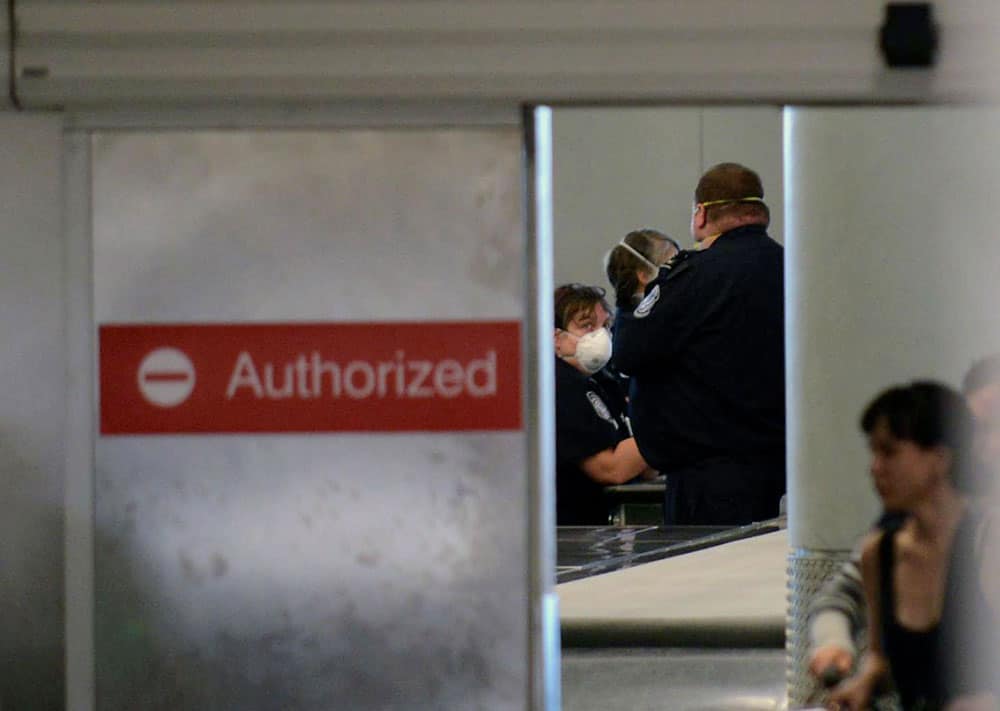
Masked customs officers look on in a screening area for international passengers from United flight 998 from Brussels at Newark airport in Newark, N.J., Saturday, Oct. 4, 2014. New Jersey health officials say Ebola has been ruled out as the cause of illness for a man who became sick on a flight from Brussels to the United States.

Masked customs officers look on in a screening area for international passengers from United flight 998 from Brussels at Newark airport in Newark, N.J., Saturday, Oct. 4, 2014. New Jersey health officials say Ebola has been ruled out as the cause of illness for a man who became sick on a flight from Brussels to the United States. Viorel Florescu / AP Photo / Northjersey.com

If you’ve been following the Ebola story, you may have noticed that the Centers for Disease Control and Prevention announced a move yesterday to try to keep the disease off US soil. At the five US airports that receive most passengers from the three countries where Ebola is circulating, passengers will be singled out on the basis of their travel records; interviewed by means of a questionnaire; and have their temperature taken, to see if they have a fever.

It’s the first attempt to control Ebola at the US border, announced, probably coincidentally, on the same day as the death of the only Ebola patient to make it into the US thus far. Political pressure for the CDC to do something was growing, and some visible step was necessary. But in the public health world, I am hearing some doubt whether it will work. Here are some reasons why.
[Read more…]

Filed Under: Science, Science Blogs, Superbug Tagged With: Airport, CDC, Ebola, screening

Keys to Controlling Ebola in the US: Travel Records and Infection Control

October 1, 2014 By Maryn Leave a Comment

Daliborlev (CC), FLickr

Daliborlev (CC), Flickr

If you’re at all interested in infectious diseases, you’ve probably heard by now that a person traveled to the United States while infected with Ebola, was diagnosed and is now in a hospital in Texas. (I was on a flight without Wi-Fi yesterday from before the press conference was announced to after it concluded. Turning my phone on after arrival was… interesting.)

The Centers for Disease Control and Prevention held a press conference yesterday afternoon (transcript is here), and WIRED’s Greg Miller covered it.

The quick details:

  • The infected person flew from Liberia to the US on Sept. 19-20 to visit family members who live in Texas.*
  • He began to develop symptoms on Sept. 24 (important because victims are infectious only after symptoms develop).
  • He went to an ER in Dallas on Sept. 26 and was given antibiotics and sent home.
  • Two days later, Sept. 28, he was taken by ambulance to Texas Presbyterian Hospital in Dallas and was admitted on suspicion of Ebola and put in isolation.
  • The test results confirming the diagnosis came down yesterday, the same day as the announcement.


(*A quick Google will demonstrate that the patient and his family have been named by the Associated Press, with the New York Times using the name and attributing it to AP. Given the unnecessary panic around Ebola at this point, I have conflicting thoughts about whether and how the name should be used, so am passing on using it for now.)

[Read more…]

Filed Under: Science, Science Blogs, Superbug Tagged With: CDC, Ebola, infection control

The Mathematics of Ebola Trigger Stark Warnings: Act Now or Regret It

September 14, 2014 By Maryn Leave a Comment

Daliborlev (CC), FLickr

Daliborlev (CC), Flickr

The Ebola epidemic in Africa has continued to expand since I last wrote about it, and as of a week ago, has accounted for more than 4,200 cases and 2,200 deaths in five countries: Guinea, Liberia, Nigeria, Senegal and Sierra Leone. That is extraordinary: Since the virus was discovered, no Ebola outbreak’s toll has risen above several hundred cases. This now truly is a type of epidemic that the world has never seen before. In light of that, several articles were published recently that are very worth reading.

The most arresting is a piece published last week in the journal Eurosurveillance, which is the peer-reviewed publication of the European Centre for Disease Prevention and Control (the EU’s Stockholm-based version of the US CDC). The piece is an attempt to assess mathematically how the epidemic is growing, by using case reports to determine the “reproductive number.” (Note for non-epidemiology geeks: The basic reproductive number — usually shorted to R0 or “R-nought” — expresses how many cases of disease are likely to be caused by any one infected person. An R0 of less than 1 means an outbreak will die out; an R0 of more than 1 means an outbreak can be expected to increase. If you saw the movie Contagion, this is what Kate Winslet stood up and wrote on a whiteboard early in the film.)

The Eurosurveillance paper, by two researchers from the University of Tokyo and Arizona State University, attempts to derive what the reproductive rate has been in Guinea, Liberia and Sierra Leone. (Note for actual epidemiology geeks: The calculation is for the effective reproductive number, pegged to a point in time, hence actually Rt.) They come up with an R of at least 1, and in some cases 2; that is, at certain points, sick persons have caused disease in two others.

You can see how that could quickly get out of hand, and in fact, that is what the researchers predict. Here is their stop-you-in-your-tracks assessment:

In a worst-case hypothetical scenario, should the outbreak continue with recent trends, the case burden could gain an additional 77,181 to 277,124 cases by the end of 2014.

That is a jaw-dropping number.
[Read more…]

Filed Under: Science, Science Blogs, Superbug Tagged With: CDC, Ebola, ECDC

Unseen Suburban Danger: Children Dying of Mosquito-Borne Diseases

September 10, 2014 By Maryn Leave a Comment

James Jordan (CC), Flickr

James Jordan (CC), Flickr

Every once in a while a scientific paper pops up in my stream that makes me think, not Cool, or Ick, but: Wow, I had no idea. I’ve just read one, published last month in Pediatrics, which definitely falls into the last category. My extreme abbreviation of the findings: On average, more than 100 children and teens each year are made dangerously ill or paralyzed by infections carried by mosquitoes, and two die.

I think of mosquito-borne infections in the United States — that is, primarily West Nile virus, and the much less well-known La Crosse virus and Eastern equine encephalitis virus — as a problem of adults. I had no clue they were so dangerous to children. (And if I didn’t, most of you probably didn’t either.)

Here’s a more detailed breakdown.

[Read more…]

Filed Under: Science, Science Blogs, Superbug Tagged With: CDC, Eee, mosquitoes

CDC Director on Ebola: 'The Window of Opportunity Really Is Closing'

September 2, 2014 By Maryn Leave a Comment

Daliborlev (CC), FLickr

Daliborlev (CC), Flickr

I said last month that I was going to try to stay out of Ebola news because so much is being written about it elsewhere. Since then, the African outbreak — now really an epidemic, since it is in multiple countries —  has ballooned to 3,000 cases, and the World Health Organization has predicted it may take 6 months or more to bring it under control.

Something caught my attention today though that felt worth highlighting. Dr. Tom Frieden, director of the US Centers for Disease Control and Prevention, gave a lengthy press conference immediately after returning to the US from a visit to the Ebola zone. Frieden has shown in the past that he knows how to be outspoken in a very strategic way; yet even so, the urgency of his language, and his call for an immediate, comprehensive global response, was striking.

[Read more…]

Filed Under: Science, Science Blogs, Superbug Tagged With: Africa, CDC, Ebola

Ebola in Africa and the U.S.: A Curation

August 4, 2014 By Maryn Leave a Comment

Daliborlev (CC), FLickr

Daliborlev (CC), Flickr

I’ve stayed out of the Ebola news so far, for a couple of reasons. First, as longtime readers know, I’m writing a book; I’m in the last 6 months of it and the work is intense and involves a lot of travel. I’m not always available at the exact moment news breaks. Second, I try to explore things here that readers may not have heard about elsewhere. The Ebola outbreak has been building in West Africa for a while, but when it was revealed at the end of last week that two American aid workers had caught the disease — and that they were being transported back to the US for treatment — the news and the reaction to it instantly filled every channel. Over the weekend, so much misinformation and outrage got pumped out that it feels as though there’s no way to cut through the noise.

But I have a few thoughts. Start with this: No, I don’t think the two aid workers who are being returned to the US pose any risk at all to the average American, or even the average Atlanta resident. Here’s my marker on that: I’m an Atlanta resident. I live less than 2 miles from the CDC and Emory University (the aid workers are being treated in a special unit housed at Emory on behalf of the CDC; the two institutions are next door to each other). My entire neighborhood and a good part of my various friendship circles are CDC employees, Emory healthcare workers, or both.

[Read more…]

Filed Under: Science, Science Blogs, Superbug Tagged With: CDC, Ebola

Resistant 'Nightmare Bacteria' Increase Fivefold in Southeastern U.S.

July 26, 2014 By Maryn Leave a Comment

Klebsiella, Janice Carr, CDC

Klebsiella, Janice Carr, CDC

There’s worrisome news here in the southeastern U.S., buried in a journal that is favorite reading only for superbug geeks like me. The rate at which hospitals are recognizing cases of CRE — the form of antibiotic resistance that is so serious the CDC dubbed it a “nightmare” — rose five times over between 2008 and 2012.

Within that bad news, there are two especially troubling points. First, the hospitals where this resistance factor was identified were what is called “community” hospitals, that is, not academic referral centers. That’s an important distinction, because academic medical centers tend to be where the most cutting-edge care is performed, and where the sickest people are. As a result, they are where last-resort antibiotics are used the most, and therefore where resistance is most likely to emerge. That CRE was found so widely not in academic centers, but rather in community hospitals, is a signal that it is probably moving through what medicine calls “the community,” which is to say, anywhere outside healthcare. Or, you know, everyday life.

A second concern is that the authors of the study, which is in Infection Control and Hospital Epidemiology, assume that their finding is an underestimate of the actual problem.
[Read more…]

Filed Under: Science, Science Blogs, Superbug Tagged With: CDC, CRE, Klebsiella

Update on the Found Vials: There Weren't 6; There Were 327. (Not All of Them Were Smallpox)

July 16, 2014 By Maryn Leave a Comment

Variola, CDC

Variola, CDC

I was away reporting most of today, and while I was out, a few federal emails landed in my mail with what probably sounded like a  thud. One was an official announcement from the Food and Drug Administration; the others were copies of FDA and NIH emails that people there thought I should see.

They all said the same thing: The six vials of smallpox virus found in an FDA cold-storage room on the National Institutes of Health campus July 1 and announced by the CDC last week had company. A lot of company: 321 other vials. Some of them contained other “select agents,” infectious pathogens considered serious enough — for the illness they create, or the lack of a vaccine to prevent or drugs to treat them — to be considered potential bioterror agents.

(If you’ve missed this story so far, catch up here, here, here and here.)

Here’s the gist of the FDA’s external announcement:

[Read more…]

Filed Under: Science, Science Blogs, Superbug Tagged With: CDC, FDA, NIH, smallpox

CDC Lab Errors and Their Implications: Congressional Hearing Today

July 16, 2014 By Maryn Leave a Comment

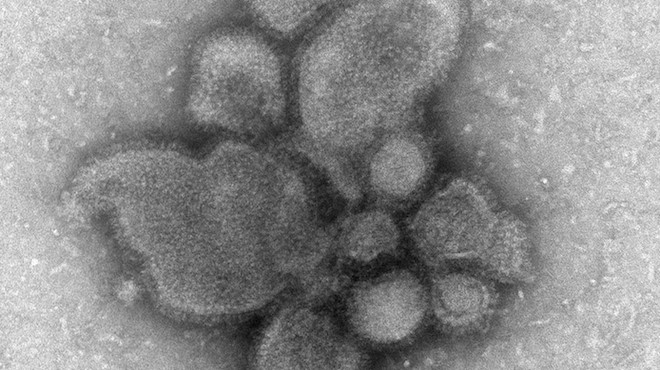
TEM image of influenza A H7N9, CDC

TEM image of influenza A H7N9, CDC

Leadership of the Centers for Disease Control and Prevention will appear today before the Energy and Commerce Committee of the House of Representatives, to answer questions about the lab accidents with flu and anthrax that the CDC disclosed in its press conference last week.

On deck: CDC Director Dr. Thomas Frieden; Dr. Joseph Henderson, Deputy Director of the CDC’s Office of Security and Emergency Preparedness; staff from the Government Accountability Office and the Animal and Plant Health Inspection Services of USDA; and academic experts.

Tuesday night, the witnesses’ written testimony was placed on the Committee’s webpage. Frieden’s says in part:

First, these incidents should never have happened, and the lack of adequate procedures and oversight that allowed them to happen was totally unacceptable. Although it does not appear that these incidents resulted in any illness, and there was no release of pathogens as a result of either event, this does not excuse what happened.

Second, we will take every step possible to prevent any future incident that could put our laboratory scientists, others in the CDC workforce and the broader community, or the public at risk… I am personally overseeing a series of reforms designed to address these specific incidents – but more broadly, recognizing that our challenge is larger than addressing these two specific incidents, I will oversee the careful and deliberate review of existing, and development of new safety practices at all levels of our Agency…

Third, we will explore the broader implications of these incidents and incorporate the lessons learned from them to proactively prevent future incidents at laboratories across the Nation that work with pathogens.

The two accidents, and especially the flu accident — in which a serious strain of avian flu was mistakenly sent to a poultry-research lab, instead of a mild one — have revived concerns about research currently being pursued, not at the CDC, that soups up flu strains to artificial combinations of transmissibility and virulence. The fear, which I’ve written about here and here, is that a lab accident could allow such manmade flu strains to escape.

In advance of the hearing, a group of scientists who have been critical of the lab-enhanced flu work (generally called “gain of function” or “dual use” research) have banded together as the Cambridge Working Group to put their concerns on the record. [Read more…]

Filed Under: Science, Science Blogs, Superbug Tagged With: anthrax, CDC, congress, influenza

The Leader of the Smallpox Eradication Effort Speaks About the Virus' Rediscovery

July 14, 2014 By Maryn Leave a Comment

Variola, CDC

Variola, CDC

Those of us who write about infectious diseases faced a conundrum last week, when the news broke that 60-year-old vials containing viable smallpox virus had been found on the National Institutes of Health campus. A responsible reporter always wants to talk to the experts in any subject. But when it comes to smallpox, experts can be hard to find.

Smallpox was one of the world’s worst killers, from prehistory through the first half of the 20th century. Yet there has not been a case of the dreadful disease anywhere since 1978, so few physicians working today have seen one. The virus is supposed to exist in only two highly secure stockpiles, so few scientists do research on it. And the aggressive campaign that chased the disease from the globe — the only human infection for which that claim can be made — ended 34 years ago. Many of the men and women who led it are in retirement, and a number have died.

Fortunately, the physician who headed that international campaign — 85-year-old Donald Ainslie Henderson, universally known as D.A. — is still working in public health, as a distinguished scholar at the bioterrorism-focused Center for Health Security of the University of Pittsburgh Medical Center. Henderson literally wrote the book on smallpox — twice, in fact: He co-authored the World Health Organization’s definitive 1,500-page reference, Smallpox and its Eradication (known in public health as the Red Book), and in 2009 wrote a personal reminiscence of the global battle, Smallpox: The Death of a Disease. Just last month, he published a lengthy, closely argued essay in the journal he co-edits, Biosecurity and Bioterrorism, urging the WHO to finally consent to destroying the last stocks of smallpox virus. (A decision the international agency declined to take; instead, for the sixth time in a row, it postponed a vote on destruction in favor of more study.) There are only a few people working in public health — not just in the United States, but in the world — who possess equivalent knowledge of smallpox, its eradication, and the persistent fears afterward that it could be used as a bioterror agent.

Last week, I talked to Henderson about the live-virus discovery and whether it will affect calls for all stocks of smallpox to be destroyed. He had some surprising things to say, particularly about the availability of smallpox vaccine. I edited our conversation for clarity and length.

[Read more…]

Filed Under: Science, Science Blogs, Superbug Tagged With: CDC, FDA, NIH, smallpox

Virus in Found Tubes of Smallpox Is Viable

July 11, 2014 By Maryn Leave a Comment

Variola, CDC

Variola, CDC

Here’s an update on the vials found on the National Institutes of Health campus last week that were labeled smallpox, and transported earlier this week to the Centers for Disease Control and Prevention: The CDC and NIH have both confirmed that the virus in two of the tubes is viable.

That is, if the vials had broken, and someone had come in contact with the dried contents, the result could have been a smallpox infection — something that has not been seen in the world since 1978.

NIH director Dr. Francis Collins made the announcement in an email sent to staff today, which was shared with me. Simultaneously, CDC director Dr. Thomas Frieden announced in a press briefing that the CDC lab studying the vials, which earlier had identified the contents as smallpox virus based on PCR of the contents’ DNA, had induced growth of the contents in a tissue culture, and confirmed that the growing material is smallpox virus.

[Read more…]

Filed Under: Science, Science Blogs, Superbug Tagged With: CDC, FDA, NIH, smallpox

Found: Forgotten Vials of Smallpox

July 8, 2014 By Maryn Leave a Comment

Variola, CDC

Variola, CDC

Headline-making news today from the Centers for Disease Control and Prevention: Workers clearing out an old storage room on the Bethesda, Md. campus of the National Institutes of Health have found a forgotten box of vials that contain smallpox.

Yes, smallpox. The “most terrible of all the ministers of death,” as Thomas Babington Macaulay called it in his 1848 History of England — a disease that was the world’s most dreadful killer, until it was declared eradicated in 1980. A disease caused by a virus that now is supposed to reside in only two highly secure laboratories on the planet, in Russia, and at the CDC.

Smallpox is the only human disease ever successfully eradicated — pursued to elimination by a relentless dragnet that closed nooses of vaccination around every identified case. After the last natural infection, in Somalia in 1977, the World Health Organization launched a second dragnet, scouring lab freezers and storage rooms for any remaining samples of the virus, and consolidating them in Siberia and Atlanta.

Somehow, these six tubes of freeze-dried virus evaded the search. They were found in the storage room of a lab that now belongs to the Food and Drug Administration but was ceded to that agency by NIH in 1972. They may date back to the 1950s.

[Read more…]

Filed Under: Science, Science Blogs, Superbug Tagged With: CDC, FDA, NIH, smallpox, Who

CDC: Traveling for Business Can Be An Expensive Health Risk

June 27, 2014 By Maryn Leave a Comment

The CDC Foundation, which supports the US Centers for Disease Control and Prevention, has put up a new publication urging business travelers to protect their health when they travel internationally and steering them to resources to help.

It’s a smart idea backed by some eye-opening statistics:

  • Cost of a course of malaria prophylaxis drugs: $162. Cost of being hospitalized with malaria on return: $25,250.
  • Cost of taking the two-dose hepatitis A vaccine: $300. Cost of treatment for a case of hep A: $2,500.
  • Cost of medical evacuation insurance: $370. Cost of a medical emergency evacuation: up to $250,000.

[Read more…]

Filed Under: Science, Science Blogs, Superbug Tagged With: Business, CDC, Travel

A World Cup Visitor: Polio from Africa in Brazil

June 25, 2014 By Maryn Leave a Comment

Eutroph-outflow

Gerick Bergsma via Eutrophication & Hypoxia / Flickr

Unnerving news from Brazil, now hosting travelers from all over the world because of the World Cup: The virus that causes polio has been found in sewage in one of the cities where matches are being played.

The World Health Organization, which announced the finding on Monday, says the virus was discovered last week in a sample collected in March at Viracopos International Airport in Campinas, which is about 60 miles outside Sao Paulo, and is where many of the World Cup teams have been landing. The agency said no cases of polio have been identified and there is no evidence the disease has been transmitted.

Genetic sequencing of the virus—the WHO didn’t say, but probably done by the Centers for Disease Control and Prevention in Atlanta—revealed that it was closely related to a poliovirus that recently caused a case of the disease in Equatorial Guinea in West Africa. Humans are polio’s only host; so that probably means the virus was carried into Brazil by a traveler, likely someone who never knew he was harboring it.

Brazil, like most of the rest of the world, continues to vaccinate against polio, even though there have been no cases of polio in Brazil since 1989, and the Americas were declared polio-free in 1991. The high vaccination rate — 95 percent of children nationwide, and higher than that in Sao Paulo State — kept the  virus from spreading.

Still: not good.

[Read more…]

Filed Under: Science, Science Blogs, Superbug Tagged With: brazil, CDC, polio, Who

U.S. Travelers Return Home With Tropical Disease. Will It Spread in the States?

June 19, 2014 By Maryn Leave a Comment

NatureGirl78 (CC), Flickr

NatureGirl78 (CC), Flickr

If you happened to be reading state health departments’ outbreak announcements this past weekend, you might have seen something interesting.

(You don’t do this? Hmm.)

Three states — Rhode Island, North Carolina and Tennessee — all said that they have identified residents who have been diagnosed with the mosquito-borne tropical disease chikungunya. The states said all the victims had recently returned from the Caribbean, where the severe, painful illness has been spreading since late last year.

People in three states, all having visited the same place, all with the same illness: As a faithful armchair-epidemiologist, I couldn’t help but wonder whether they were linked in some manner, perhaps by a cruise or a church trip. As it turns out, the victims announced last weekend represent something more subtle and potentially more troubling: an increasing number of US residents acquiring the disease abroad and returning to the US with it — and posing the question of whether it will spread to mosquitos, and then to other humans, within this country’s borders.

What do I mean by “increasing”? This, for instance. The Centers for Disease Control and Prevention report chikungunya among US residents weekly on their website. Last week, the count for this year was 39. On Tuesday, it doubled, to 80.

[Read more…]

Filed Under: Science, Science Blogs, Superbug Tagged With: CDC, dengue

Very Serious Superbugs in Imported Seafood

June 11, 2014 By Maryn Leave a Comment

Image: Matsuyuki, Flickr

Image: Matsuyuki/ Flickr

Breaking news today from the Centers for Disease Control and Prevention, out of its open-access journal Emerging Infectious Diseases: Researchers in Canada have identified a very highly resistant bacterium in squid imported from South Korea and being sold in a Chinese grocery store.

The letter reporting the finding was supposed to go live at noon ET, but hasn’t yet. When it does, it will be linked from this page, under the subheading Letters. It is titled: “Carbapenamase-Producing Organism in Food, 2014.”

[Read more…]

Filed Under: Science, Science Blogs, Superbug Tagged With: antibiotics, CDC, food policy, food safety, NDM, NDM-1, Resistance

  • 1
  • 2
  • 3
  • …
  • 6
  • Next Page »

© [fl_year} Maryn McKenna | Web Design Services by Sumy Designs, LLC

Facebook