Maryn McKenna

Journalist and Author

  • Contact
  • Blog
  • Speaking and Teaching
  • Audio & Video
    • Audio
    • Video
  • Journalism
    • Articles
    • Past Newspaper Work
  • Books
    • Big Chicken
    • SuperBug
    • Beating Back the Devil
  • Bio
  • Home

Get Your Shots, Wash Your Hands, Thanks, and Goodbye

March 27, 2015 By Maryn Leave a Comment

icenine-exit

IceNine (CC), on Flickr

A little less than 5 years ago, editor Betsy Mason of WIRED Science called to ask whether I’d be interested in joining a new thing. WIRED was thinking about starting a science blog platform; she wondered whether I’d want to be one of the bloggers.

I did very much want: WIRED is both a great magazine, with inspiring storytelling and innovative design, and a brand with international reach. I was a bit perplexed why they would want me — scary diseases didn’t seem like a core interest for WIRED readers — but Betsy (now one of the authors of WIRED’s Map Lab blog) was confident the audience was there.

She was right. Superbug debuted Sept. 14, 2010 with a report on the “Indian superbug,” the antibiotic resistance factor NDM that was then just starting to move across the world. My second post explored “livestock MRSA,” the bacterium that originates in antibiotic overuse in agriculture, and the third looked at the shivery subject of a rare and deadly parasite transmitted by organ transplants. Those three posts pretty much defined Superbug’s turf: public health, global health, and food policy, with a sprinkle of dread. Readers responded with fascination and good will, then and to the more than 300 posts afterward.

Of which, as you’ve probably guessed, this is the last. Superbug has had a fantastic run, but there was only one other place I wanted to work, and I’m headed there. Next week, I’ll be joining National Geographic’s Phenomena under a new blog name.

(Worth saying: This move is coincident with Wired.com’s redesign, but is not at all related. Phenomena happened to have a rare opening.)

[Read more…]

Filed Under: Science, Science Blogs, Superbug Tagged With: antibiotics, Ebola, food policy, Lyme, Never Seconds, polio, Resistance, TB

"We Are Not Ready": Ebola Analysis from Front-Line Workers (And Bill Gates)

March 23, 2015 By Maryn Leave a Comment

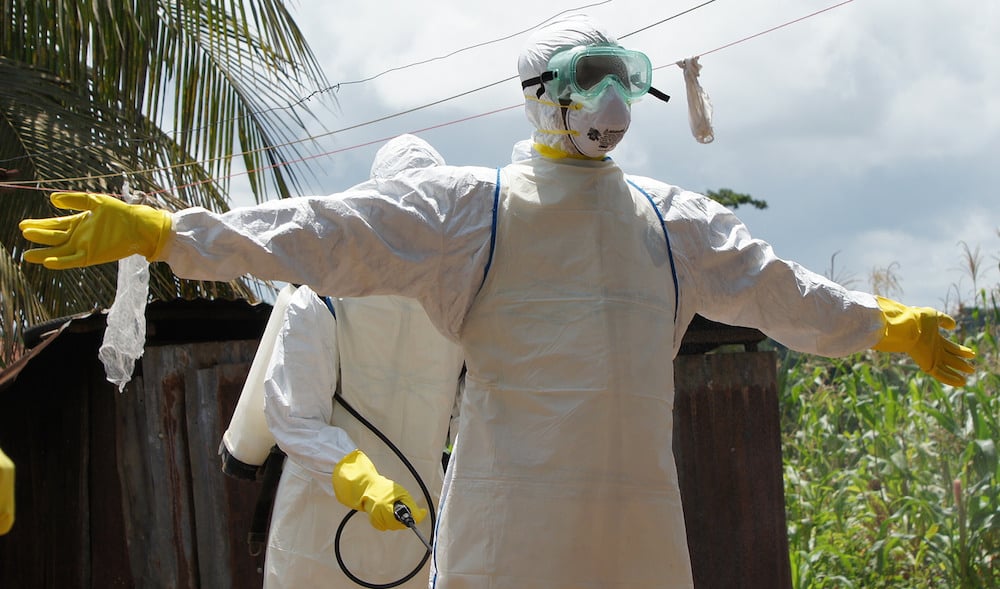
A volunteer gets sprayed a bleach mixture while training for a mission to support the German Red Cross in Liberia, Oct. 23, 2014.

A volunteer gets sprayed a bleach mixture while training for a mission to support the German Red Cross in Liberia, Oct. 23, 2014. Markus Schreiber/AP

Bill Gates speaks at TED 2015 in Vancouver. (Image courtesy TED on Flickr (CC).)

Bill Gates speaks at TED 2015 in Vancouver. (Image courtesy TED on Flickr (CC).)

We’ve just passed a difficult and little-noticed anniversary: Last week, the Ebola epidemic in West Africa achieved its first birthday. Though the viral outbreak has been contained, it is still not under control: According to the World Health Organization, cases continue in Sierra Leone and are rising again in Guinea. Liberia was about to record an entire incubation period without a new case — a signal that the chain of person-to-person transmission might have been broken — but on Friday, it announced that it had found a single new case. How that woman became infected is unclear; it is possible that she represents, not a new outbreak, but a brief interruption in an otherwise promising trend.

It has been decades since there was an epidemic of this persistence and magnitude. No other Ebola outbreak matches it; nor does the 2003 epidemic of SARS. You would have to go back to the early days of HIV in the 1980s, or to the flu pandemics in 1968, 1957 or even 1918, to find an outbreak that sickened so many people, challenged international response capacity so much, and instilled such fear in other countries.

The anniversary has triggered reflections. Some criticize the response to Ebola for being inadequate and slow. Others — such as two talks at last week’s TED conference, one by Bill Gates — extract lessons that should inform responses to future epidemics.

Because there will be future epidemics. That’s for sure.

[Read more…]

Filed Under: Science, Science Blogs, Superbug Tagged With: Bill Gates, Ebola, GAVI, Seth Berkley, TED, vaccines

Ebola Could Cause Thousands More Deaths — By Ushering In Measles

March 15, 2015 By Maryn Leave a Comment

Women gather in the Guinean village of Meliandou, believed to be Ebola's ground zero.

Women gather in the Guinean village of Meliandou, believed to be Ebola’s ground zero. Jerome Delay/AP

Awareness of Ebola is picking up again in the United States: An American volunteer who was working in Sierra Leone has contracted Ebola and been medevac’d to the National Institutes of Health Clinical Center for Ebola treatment, and 10 more volunteers have been brought back to NIH, Omaha and Atlanta, to be examined at three of the four institutions in the US that have safe units to house them.

It’s a reminder that Ebola still persists in West Africa: In the last period the World Health Organization reported on (the 7 days ending March 8), there were 116 new cases. One bit of good news: None of them were in Liberia, for the second week in a row. But Guinea and Sierra Leone, where this volunteer was infected, continue to struggle.

And in a research paper published as that volunteer was being flown back, there’s a reminder that the Ebola outbreak is creating layers of health risks for those countries. In Science , researchers from NIH and four universities warn that Ebola’s interruption of other health services, such as childhood immunizations, threatens to create secondary epidemics of preventable diseases that would dwarf Ebola’s impact. In particular, they warn that there could be 100,000 additional measles cases, and up to 16,000 additional deaths, if health services are not restored.

[Read more…]

Filed Under: Science, Science Blogs, Superbug Tagged With: Ebola, measles, Who

Your McNuggets: Soon Without a Side of Antibiotics

March 4, 2015 By Maryn Leave a Comment

Fast-food giant McDonald’s announced today that it will cease buying chicken raised with the routine use of most antibiotics, a move that seems certain to reframe the contentious debate about agriculture’s use of the increasingly precious drugs. The company set a deadline of two years to make chicken in its 14,000 US locations substantially antibiotic-free.

The announcement instantly makes McDonald’s the largest company by far to use its buying power to change how livestock are raised. Its 25 million US customers a day dwarf those at Chipotle Mexican Grill, which pioneered fast food using antibiotic-free meat, and also at Chick-fil-A, which announced a year ago that it would move to antibiotic-free chicken in five years.

McDonald’s new policy doesn’t solve the farm-antibiotics problem. The company is making the move only for chicken, not for beef or pork (though chicken is already the meat Americans eat the most). And the policy has important caveats. But since McDonald’s is the largest food-service buyer of chicken in America, this can’t help but affect other restaurants, and production of other meats.

In a phone interview, Marion Gross, senior vice president of McDonald’s North America Supply Chain, said the company made the move because customers have been asking for it. “This about meaningful action that is important to our customers,” she said. “We’re happy to be able to achieve this. This is not something new; we had our first antibiotic policy in place back in 2003, so it’s the evolution of a journey we have been on for some time.”

[Read more…]

Filed Under: Science, Science Blogs, Superbug Tagged With: animals, antibiotics, mcdonalds, Resistance

Ebola's Not Over For Health Care's Volunteers

March 4, 2015 By Maryn Leave a Comment

EU Humanitarian Aid and Civil Protection (CC) on Flickr

EU Humanitarian Aid and Civil Protection (CC) on Flickr

You might have missed it, because we’re barely talking about it in the United States, but the African Ebola epidemic has still not died down: the World Health Organization identified 99 new cases in its most recent status report. And as long as the disease persists, the possibility exists that it could spread back out of that confined area to other countries. Which makes it a good time to consider several new reports of what happened to US health care workers involved in responding to Ebola, and how that experience still affects their lives.

Short version: Of two who contracted Ebola and survived, one remains ill and fears she was manipulated, and the other, though well, feels he was misrepresented and stigmatized. Both worry their experience will dissuade others from volunteering in turn. And a major new government report backs them up.

[Read more…]

Filed Under: Science, Science Blogs, Superbug Tagged With: Craig Spencer, Ebola, ethis, Kent Brantly, Nina Pham

Resistance: The Movie That Will Make You Care About Antibiotic Misuse

February 24, 2015 By Maryn Leave a Comment

A few years ago I happened to get introduced to a pair of filmmakers, Michael Graziano and Ernie Park, who were starting to explore the topic of antibiotic resistance. They had the same questions about resistance that I obsess over, and the same shock about how enormous the problem is: according to a recent estimate, 700,000 deaths every year, likely to rise into the millions if nothing is done.

They recognized their disbelief as the creative spark for a project, and three years later, have brought out Resistance, a documentary now available on iTunes. LV Anderson just said about it, in Slate:

Regardless of your preexisting interest in public health or food politics, once you learn a little about antibiotic abuse, you won’t be able to stop caring about it. Without antibiotics, many of the medical treatments that we take for granted would be impossible, and the speed and carelessness with which we squander these important drugs — on people who don’t need them and on livestock that really don’t need them — is downright infuriating…  In talking-head interviews with well-chosen, highly articulate experts, Resistance explains the fundamental reason the incorrect use of antibiotics is so dangerous: Every time we use antibiotics, we give bacteria another chance to develop resistance to it.

I think Resistance is a fantastic exploration of the problem, but I am likely to be biased, because I am in it. But I realized as I watched it that there was a lot about the documentary that I didn’t know: how it came to be, why the stories within it were chosen, and whether making it changed the filmmakers’ life.

Here’s an edited chat with Michael Graziano about making the film.

Maryn McKenna: Your previous film, Lunch Line, was about school lunch and nutrition. Antibiotic resistance seems a long way from that. What got you interested?

Michael Graziano: I was hoping to get rich as quickly as possible. I calculated that if I spent three years making a film about science and public health the money would start pouring in.

Turns out my calculations were wrong.

[Read more…]

Filed Under: Science, Science Blogs, Superbug Tagged With: agriculture, antibiotics, documentary, Resistance

The Poultry Industry Responds to an Activist Farmer

February 23, 2015 By Maryn Leave a Comment

Farmer Craig Watts.

Farmer Craig Watts. RANDALL HILL/Reuters/Corbis

Last week I broke the story that contract chicken farmer Craig Watts, who had let animal-welfare activists film in the barns where he raises poultry for Perdue Farms, filed for whistleblower protection against the company because he felt retaliated against. In his complaint — made to the Department of Labor under the provisions of the Food Safety Modernization Act — Watts said that the condition of the chicks Perdue delivered to him compelled him to raise “adulterated or misbranded food” for consumers, and that when he attempted to reveal this, the company harassed him with inspectors’ visits.

When I posted on Watts’ complaint, which has the form of a lawsuit though it is filed with a federal agency not a court, I said I’d update once I got reaction from the company or the industry. I’ve received their reactions now and, since it’s been a few days, it seems more fair to break them out in a separate post, rather than adding to last week’s.

Short version, with details below: Perdue and the National Chicken Council both say that Watts — who has not lost his contract with the company — is not being retaliated against, but needs guidance to do a better job raising the chickens he is sent.

[Read more…]

Filed Under: Science, Science Blogs, Superbug Tagged With: antibiotics, chicken, poultry, whistleblower

A Factory Farmer Strikes Back at the Company He Farms For

February 19, 2015 By Maryn Leave a Comment

Farmer Craig Watts. original: video by Compassion in World Farming

Farmer Craig Watts. Screenshot: video by Compassion in World Farming

Back in December I wrote about a chicken farmer who took the extraordinary step of inviting animal-welfare activists into his barns to document the conditions under which his contract compels him to raise his birds. The farmer, Craig Watts of North Carolina, has raised chicken for Perdue Farms for two decades and has often been a top producer for them; he was not an outlier, but someone well within the corporate farming system. Yet it weighed on his conscience that even when he did his best to care for them, the birds seemed deformed and unwell. “The consumer’s being hoodwinked,” he said at the time.

The video he made with the group Compassion in World Farming has been viewed more than 1.6 million times. Watts continues to raise chickens for Perdue; the company did not yank his contract. But he claims he has been subjected to a campaign of retaliation from Perdue as a result, with very frequent visits from a variety of inspectors, and so he has taken a second extraordinary step. He has filed a federal complaint claiming whistleblower protection, alleging that he was forced to violate laws that protect consumers against “adulterated or misbranded” food.

Watts was not the first chicken contract farmer to speak out — Carole Morrison, a Maryland contract farmer, appeared in the documentary Food, Inc. and lost her livelihood as a result — but he’s almost certainly the first to strike back.

Watts is being represented by the Food Integrity Campaign, part of the nonprofit Government Accountability Project, which filed on his behalf this morning with the Occupational Safety and Health Administration, within the US Department of Labor. The complaint and cover letter are on the nonprofit’s site. The cover letter sums up the issue (“Complainant” is Watts and “Respondent” is Perdue):

Complainant has observed an increase in the number of chicks placed on his farm carrying bacterial infections. As a result, Complainant believes that Respondent has not adequately controlled sanitation in its hatcheries to prevent birds from developing infections while at the hatchery, and is not culling sick birds from flocks at the hatchery with sufficient care to prevent the introduction and spread of diseases among the flocks placed on his farm. Additionally, Complainant believes that because Respondent crowds too many birds into each house, the birds do not have adequate room to move around freely, causing them trample each other to access water and food, which in turn leads to scratches and increased risk of infection. Moreover, Respondent prohibits Complainant from administering antibiotics and other medications to sick birds, and Respondent has refused to administer drugs to the birds when Complainant has sought help dealing with apparent outbreaks of disease among flocks placed on his farm.

Watts and his attorneys claim protection under the recent Food Safety Modernization Act, which added whistleblower “employee protection” provisions to the thicket of laws that govern food safety in the United States.

It’s notable that, in the complaint, Watts doesn’t ask for much: He doesn’t seek punitive damages, for instance, just attorneys’ fees and legal costs. Mostly what he asks is to continue to farm. After he went public,  the poultry industry responded that the conditions in the video were the result of his poor farming practices; Watts says the first inspectors’ visits were within hours of the video going live, and continued “almost daily” since then, 23 times in the past two months. According to him, he was put on a  “performance improvement plan,” and the complaint asks for that to be reversed, and for an end to any “retaliatory increased inspections.”

This is a lot of legalese, but the key facts are these: Most of the meat we eat in the US is raised in conditions that most consumers cannot see. This farmer felt those conditions were injurious to animals and bad for eaters. He opened the doors on his small corner of the industry in the hopes of changing it, and he wants to keep those doors open. Whistleblower protection might help him do that. I reached Watts quickly by phone, and he said: “I want there to be some avenue for farmers to be protected, so that they don’t have to be walking around on eggshells. Hopefully this is it.”

Because the complaint was just posted, Perdue has not yet commented, but I will ask them for comment and update this post when they do.

Here’s the original video in which Watts appeared:

Filed Under: Science, Science Blogs, Superbug Tagged With: antibiotics, chicken, poultry, whistleblower

Still Fighting Ebola: A View from Liberia's Front Line

February 16, 2015 By Maryn Leave a Comment

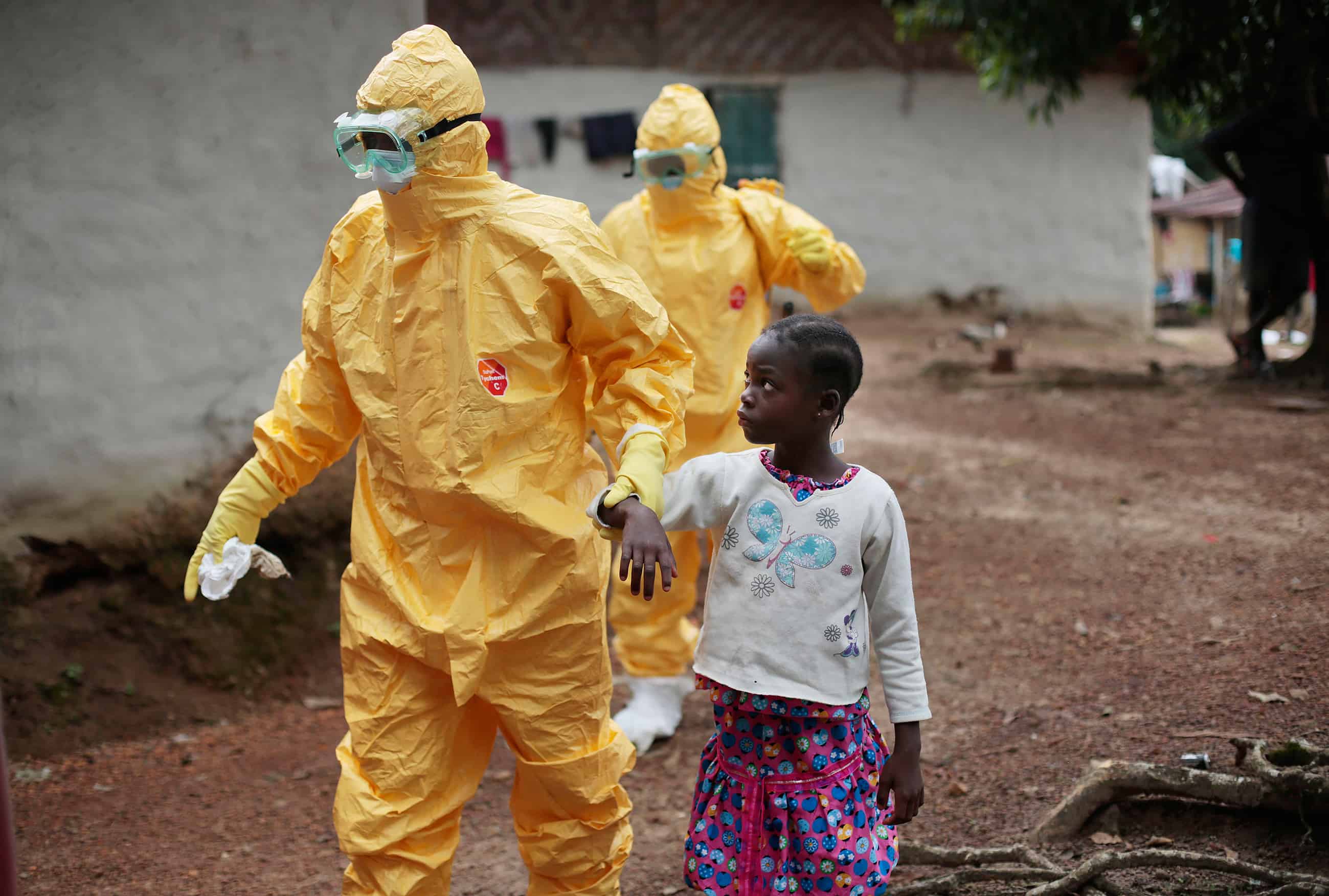
Nine-year-old Nowa Paye is taken to an ambulance after showing signs of the Ebola infection in the village of Freeman Reserve, about 30 miles north of Monrovia, Liberia.

Nine-year-old Nowa Paye is taken to an ambulance after showing signs of the Ebola infection in the village of Freeman Reserve, about 30 miles north of Monrovia, Liberia. Jerome Delay/AP

We’ve pretty much signed off on Ebola in the United States — last week, President Obama withdrew the US troops sent to fight the disease — but in Africa, the news on the epidemic has seemed pretty good. The overall number of known cases stands at 22,894, with 9,177 deaths, far below the dire predictions made last fall that the epidemic could sicken millions.

Progress at beating the disease is stalling, though. According to the World Health Organization, the number of new cases has gone back up for two weeks in a row. Sierra Leone, now the outbreak’s epicenter, still has what the WHO calls “widespread transmission,” and on Saturday its government quarantined part of the capital. Guinea has had a spike in cases, and in several areas, mobs have attacked clinics.

The news is best from Liberia, where there were just three new cases last week compared to 65 in Guinea and 76 in Sierra Leone. Liberia was hard-hit, with 8,881 confirmed cases and 3,826 deaths — 300 cases per week at some points. But it also seems to have done the most to curb the disease’s spread: Today, schools that had been closed since last fall are supposed to open again.

Last week, though, I had the opportunity to speak to a front-line Ebola fighter in Liberia, and what he told me underlined how precarious that country’s progress is.

[Read more…]

Filed Under: Science, Science Blogs, Superbug Tagged With: Ebola, Who

How to Fight Superbugs: Start Spending Money

February 5, 2015 By Maryn Leave a Comment

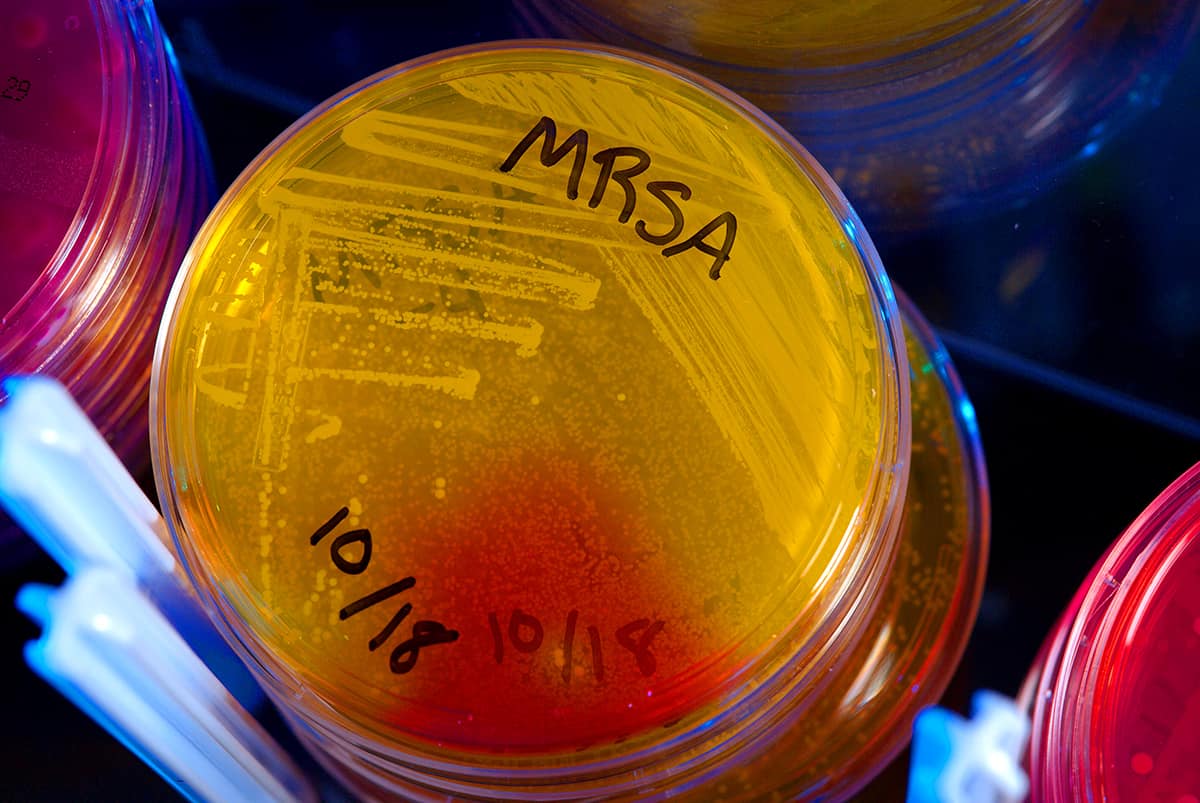
Plates of Methicillin-Resistant Staphylococcus Aureus (MRSA) in CDC’s healthcare-associated infections laboratory.

Plates of Methicillin-Resistant Staphylococcus Aureus (MRSA) in CDC’s healthcare-associated infections laboratory. Center for Disease Control/AP


The government-chartered British project examining antibiotic resistance — which made such a splash in December with its prediction that untreatable resistance will kill 10 million people per year by 2050 — has produced its first set of recommendations for turning back the problem.

They come down to this: Start spending money.

The project — formally titled the Review on Antimicrobial Resistance — analyzes the funding spent directly on resistance research, and indirectly through training specialists and investing in innovation, and finds that the resources devoted by governments and the private sector are not up to the job. With the same bluntness that marked its first report, the project says: “There is a problem of chronic under-investment in both the financial and human capital needed to tackle antimicrobial resistance.”

[Read more…]

Filed Under: Science, Science Blogs, Superbug Tagged With: antibiotics, Resistance

The White House 2016 Budget Includes Big Funding for Antibiotic Resistance

January 31, 2015 By Maryn Leave a Comment

Roman Boed (CC), Flickr

Roman Boed (CC), Flickr

Next week, President Barack Obama will unveil his full budget request for the coming fiscal year. When he does, he’ll also reveal details of how his administration plans to fund the national strategy for combating antibiotic resistance that the White House released last autumn.

Here’s what we know so far, based on a fact sheet that the White House released earlier this week:

[Read more…]

Filed Under: Science, Science Blogs, Superbug Tagged With: antibiotics, budget, Resistance, White House

A New Polio Case in Pakistan and an Unsolved Epidemic

January 21, 2015 By Maryn Leave a Comment

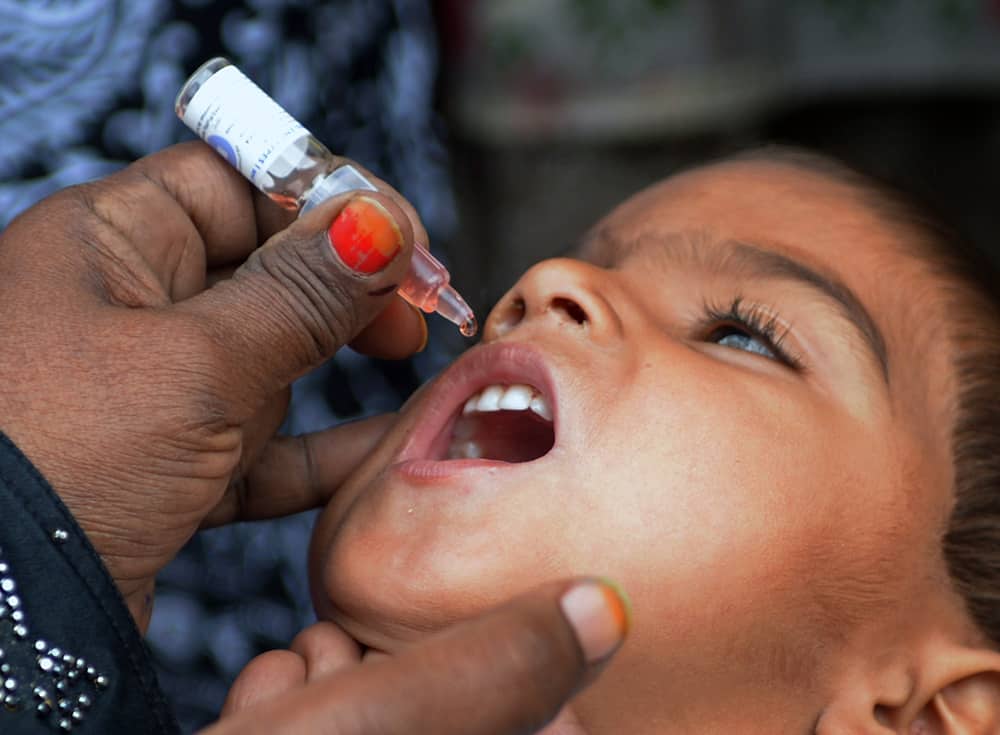
A Pakistani health worker administers polio drops to a child during a polio vaccination campaign in Karachi on January 20, 2015.

A Pakistani health worker administers polio drops to a child during a polio vaccination campaign in Karachi on January 20, 2015. Rizwan Tabassum/AFP/Getty Images

Time to check in on another globe-spanning epidemic. While we were all watching Ebola, polio continues—and as long as it does, it holds the possibility of surging back over the rest of the world.

A quick refresher: Polio has been the target of a very expensive and aggressive multi-national eradication campaign since 1988. By last summer, polio was endemic—that is, transmission from one person to another has never been interrupted—in Afghanistan, Pakistan and Nigeria. Very high rates of vaccination have kept the paralyzing disease from leaking over those countries’ borders to most of the rest of the world—but every once in a while, something slips through, or a country runs out of money and lets its vaccination campaigns lapse.

As a result, last year, there was still polio in seven other countries — Cameroon, Equatorial Guinea, Ethiopia, Iraq, Israel, Somalia and Syria—and the World Health Organization declared an international emergency.

So, updates: Despite its ongoing civil strife, Syria has not had a polio case in a year. There has been no detection of polio virus in sewage in Israel or the West Bank or Gaza since March. It has been almost 6 months since the last polio case in Nigeria—extremely good news because that country has periodically re-infected other areas of Africa.

But: Pakistan remains a problem.

[Read more…]

Filed Under: Science, Science Blogs, Superbug Tagged With: Pakistan, polio, Who

The Long Tail of Ebola: Depressing African Economic Progress

January 12, 2015 By Maryn Leave a Comment

EpSos.de (CC), Flickr

EpSos.de (CC), Flickr

It has almost completely vanished from the news in the United States, but Ebola persists in three countries in Africa: Liberia, Guinea, and Sierra Leone. The World Health Organization’s update today puts the case toll at 21,171 in those three countries, with 8,371 deaths. (Eight thousand deaths. Think about that, for a minute.)

But the uncomfortable reality is that the impact of Ebola reaches far beyond those individual cases. In reports issued today and in December — which I missed at the time, so am bumping it back up for reading now — the World Bank predicts that the disease will cripple the economies of these countries into the future.

[Read more…]

Filed Under: Science, Science Blogs, Superbug Tagged With: Ebola, economics

2015 Resolution: Accept that Diseases Hop Borders, Don't Dismiss Them, and Don't Panic

January 3, 2015 By Maryn Leave a Comment

Cogdog (CC), Flickr

Cogdog (CC), Flickr

Happy New Year, constant readers. There’s no question that the big public health story of 2014 was Ebola. The African epidemic has now racked up more than 20,000 cases, according to the World Health Organization, which has put together a useful map and timeline of developments since March. If you’d like to look back on the year, the best sum-up by far is the New York Times’ long and beautifully told “How Ebola Roared Back,” and for a sense of what we learned this year — and what we still don’t know — consider reading Helen Branswell’s account, published at the Winnipeg Free Press.

The international health community still must focus on Ebola; the disease is by no means contained. But my New Year’s wish, for those of us outside that community, is that we begin 2015 by accepting that wherever diseases occur, they are going to travel. We had repeated demonstrations of this with Ebola; and as a global community, we didn’t react well. (If you feel like revisiting the cringe-making details, the Today in Ebolanoia Tumblr is still up.)

The disease that really makes this case, though, is the antibiotic resistance factor NDM. Since its original discovery in one person in Sweden in 2008, this snippet of DNA — which makes common infections essentially untreatable — has been carried by patients to at least 40 countries, and spread within those countries to create local hospital outbreaks.

That’s a lot of border-crossing.

[Read more…]

Filed Under: Science, Science Blogs, Superbug Tagged With: Ebola, NDM, NDM-1

Holiday Travel? Get Vaccinated First, or Bring Home Something Unexpected

December 24, 2014 By Maryn Leave a Comment

Angelo DeSantis (CC), Flickr

Angelo DeSantis (CC), Flickr

Happy holidays, constant readers. If you’re like many people, you may be preparing to take a trip, maybe for a break from winter, maybe just to see family. As you’re getting ready, making sure to decant the toiletries and pack the presents unwrapped, here’s one thing not to forget: your vaccinations.

Really, this is important. Last January, according to an account recently published by the Centers for Disease Control and Prevention, four unvaccinated people were infected with measles by a never-found fifth person during a single 4-hour window at an airport gate somewhere in the US.

[Read more…]

Filed Under: Science, Science Blogs, Superbug Tagged With: Airport, CDC, measles

The Coming Cost of Superbugs: 10 Million Deaths Per Year

December 15, 2014 By Maryn Leave a Comment

Plates of Methicillin-Resistant Staphylococcus Aureus (MRSA) in CDC’s healthcare-associated infections laboratory.

Plates of Methicillin-Resistant Staphylococcus Aureus (MRSA) in CDC’s healthcare-associated infections laboratory. Center for Disease Control/AP

If you weren’t taking antibiotic resistance seriously before, now would be a good time to start.

A project commissioned by the British government has released estimates of the near-future global toll of antibiotic resistance that are jaw-dropping in their seriousness and scale: 10 millions deaths per year, more than cancer, and at least $100 trillion in sacrificed gross national product.

[Read more…]

Filed Under: Science, Science Blogs, Superbug Tagged With: antibiotics, Resistance

Hoping to Change the Industry, a Factory Farmer Opens His Barn Doors

December 4, 2014 By Maryn Leave a Comment

This post has been updated; read to the end.)

A few months ago, reporting on farm antibiotic use, I met a North Carolina farmer named Craig Watts. Craig lives in a small town near the South Carolina line where his forebears have been since the Carolinas were a British colony, and for more than 20 years, he has raised broiler chickens for Perdue Farms.

Watts went into chicken farming because, where he lives, there were not many alternatives. His parents and relatives had been row-crop farmers, but after the tobacco economy began to collapse, that looked like not a great way to make a living. Out of college, he began working as a field technician for an agricultural-chemicals company, but he disliked cubicle life and wanted to get back outside. When an advance man for Perdue came calling, showing spreadsheets of how lucrative chicken farming might be, he decided to give it a try.

It worked for him at first; he said that he was, intermittently, a top earner in the slaughterhouse complex that buys his chickens. But over the years, he chafed at the economic conditions the vertically integrated business imposed on farmers, who always seemed to get the raw end of the deal, and he grew increasingly uncomfortable with what intensive farming did to the chickens themselves. He began speaking out: first writing op-eds, then testifying at a government hearing exploring unfair contract conditions, and then talking to advocates and journalists.

And now he has taken his boldest step yet — really an extraordinary one, given the closed-door nature of most corporate farming: He has made a video, in cooperation with the animal-welfare group Compassion in World Farming, in which he escorts cameras into his broiler barns.

[Read more…]

Filed Under: Science, Science Blogs, Superbug Tagged With: antibiotics, chicken, poultry

New Analysis Says FDA Farm Antibiotic Reduction Won't Work As Planned

December 3, 2014 By Maryn Leave a Comment

Epsos.de (CC) on Flickr

Epsos.de (CC) on Flickr

A brand-new analysis of the Food and Drug Administration’s plans to restrict agricultural overuse of antibiotics brings some needed clarity to the subject — and calls into question how effective those plans will be.

The analysis, published by the Pew Charitable Trusts, examines whether the FDA’s request to veterinary pharma companies — to observe voluntary curbs on the antibiotics they sell — is actually going to make much difference in quantities of antibiotics that are used. And concludes: Maybe not.

[Read more…]

Filed Under: Science, Science Blogs, Superbug Tagged With: antibiotics, FDA, growth promoters

To Slow Down Drug Resistance in Health Care, Buy an Antibiotic-Free Turkey for Thanksgiving

November 19, 2014 By Maryn Leave a Comment

Organic turkey poults, Lance Cheung, USDA. CC on Flickr

Organic turkey poults, Lance Cheung, USDA. USDA/Flickr

I thought it might be time to switch away from Ebola and catch up with other disease problems that continue to occur in the world. (If you miss Ebolanoia, though, I’m still collecting instances at my Tumblr. The latest: Indian authorities have force-quarantined in an airport a man who returned from West Africa with a clean bill of health and negative blood tests. They say they will not allow him to leave until his semen tests negative for Ebolavirus. Yes, they are insisting on samples.)

So: How can healthcare workers contribute to slowing down antibiotic resistance? A healthcare nonprofit suggests they commit to buying an antibiotic-free turkey for Thanksgiving.

If it feels like the problem in one sphere, medicine, doesn’t have much to do with the other, agriculture, then you are the perfect target for this pledge. (Even if you don’t actually work in health care.)

Here’s the backdrop to the campaign, created by Health Care Without Harm,the Sharing Antimicrobial Reports for Pediatric Stewardship (SHARPS) collaborative, and the Pediatric Infectious Disease Society (PIDS):

[Read more…]

Filed Under: Science, Science Blogs, Superbug Tagged With: CDC, ECDC, Resistance, Thanksgiving, Turkey

Ebola Here and There: Knowing When It Is And Isn't Over

November 13, 2014 By Maryn Leave a Comment

The European Commission's DG ECHO team (CC), on Flickr

The European Commission’s DG ECHO team (CC), on Flickr

It may have skipped your notice, but the United States is now Ebola-free. Dr. Craig Spencer was released from treatment in New York City Tuesday; that day also marked the end of the watch period for Kaci Hickox, the nurse force-quarantined in New Jersey and then allowed to go home to a remote town on the Maine border. The two nurses who treated deceased patient Thomas Duncan, Amber Vinson and Nina Pham, were both released from treatment two weeks ago. The health care workers who were sickened in Africa and came home for treatment have all gone home.

There are some things to note in these events. The first is that the Ebolanoia over the possibility of the disease spreading in the United States  is now clearly shown to have been an over-reaction. No one got sick because Spencer went around New York City in the days before he developed symptoms. No one got sick, either, from contact with Kaci Hickox — and, an important point, she never developed symptoms herself. Her quarantine was self-evidently unnecessary. The only people to have contracted Ebola in the United States are the two nurses who were in close face-to-face contact with Duncan when he was floridly ill, and while the hospital that treated him, and the Centers for Disease Control and Prevention, were working out the best protective protocols.

So we really could calm down now. (Have you noticed how the chatter has died down? Especially since the election?) But we also shouldn’t forget that Ebola continues in West Africa, and could return to the US at any time.

Here’s an example of the continuing challenges: the West African country of Mali.

[Read more…]

Filed Under: Science, Science Blogs, Superbug Tagged With: CDC, Ebola, Mali, Who

  • 1
  • 2
  • 3
  • …
  • 25
  • Next Page »

© [fl_year} Maryn McKenna | Web Design Services by Sumy Designs, LLC

Facebook